Your Attic Lives Through a Different Winter Than You Do
Below the ceiling, a Lethbridge winter is a series of warm windy afternoons and hard refreezing nights. Above the ceiling, that same weather is a siege. Each chinook flood of meltwater runs downhill and refreezes at the cold eave; the ice ridge grows one cycle at a time until it holds future melt back on the roof, which is how water ends up pushed sideways beneath the shingles, soaking sheathing that was never designed to be wet. Homes with a north-facing slope or heavy afternoon shade see the worst repeats, because theirs refreeze first and thaw last.
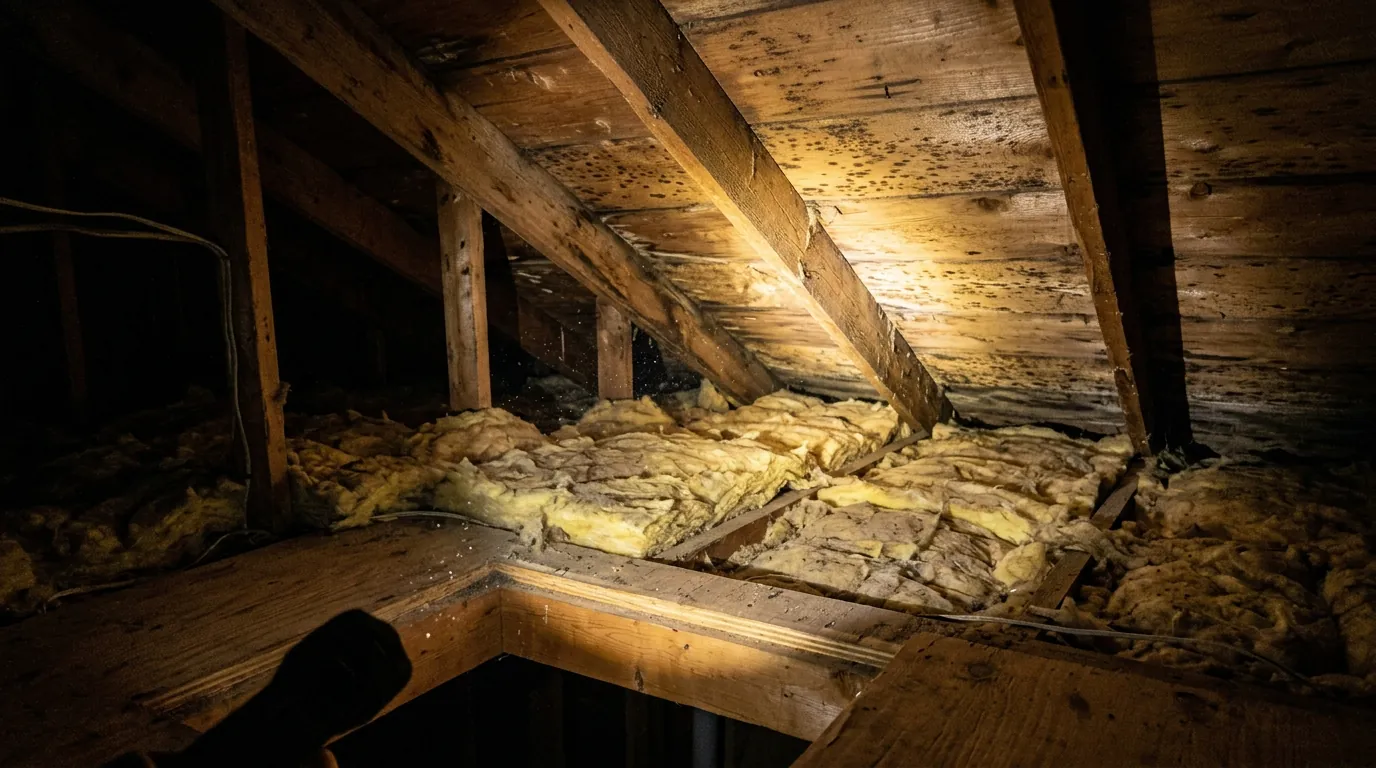
Meanwhile the ventilation that should dry that wood between cycles is frequently missing in action. Soffit intakes get smothered under blown insulation because no baffles were ever fitted. Attics that were reroofed carry intake-exhaust imbalances that pull snow straight through the vents. Bath fans in decades of Lethbridge housing terminate somewhere short of the roof cap, dumping warm shower air into a cold cavity, where it condenses on the first surface it meets — sheathing, nails, or the underside of the insulation above the bathroom itself.
None of this is visible from the living space, which is why attic growth so often arrives as a surprise at a home inspection rather than a complaint to a plumber. The good news: it is also among the most fixable forms of mould, because the wood survives and the causes are mechanical.