The Signature Lethbridge Problem
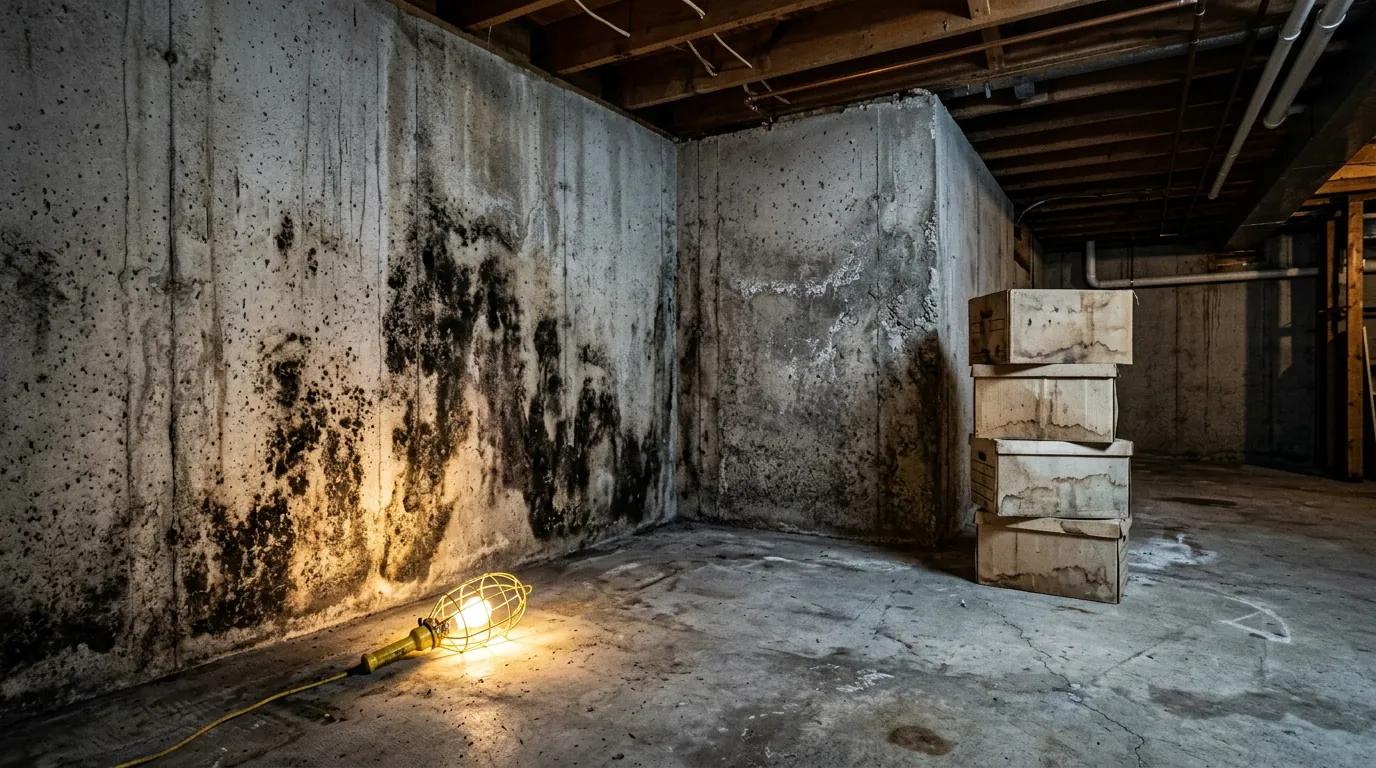
If mould in this city has a home address, it is the basement. Lethbridge winters do not bury foundations under one stable snowpack; they batter them with cycles. Snow builds, a chinook melts it into the soil by afternoon, the same night freezes it into the wall, and the expansion opens hairline cracks nothing visual ever announces. Dozens of these swings a winter mean the outside face of your foundation is wet when most of the city assumes January is the dry season. On the older north side, around the downtown core, and through the postwar south side, foundation systems that are decades past their design life make that pattern worse.
The result is the same inventory in house after house: staining along the base of finished drywall, mineral streaks climbing a poured or block wall, musty odour strongest after a thaw, carpet underpad quietly damp along exterior walls, and window wells holding a lens of ice and grit each spring. Each of these is a photograph of moisture moving through a wall — and each is where professional removal has to start, because the growth is never just on the surface that shows it.
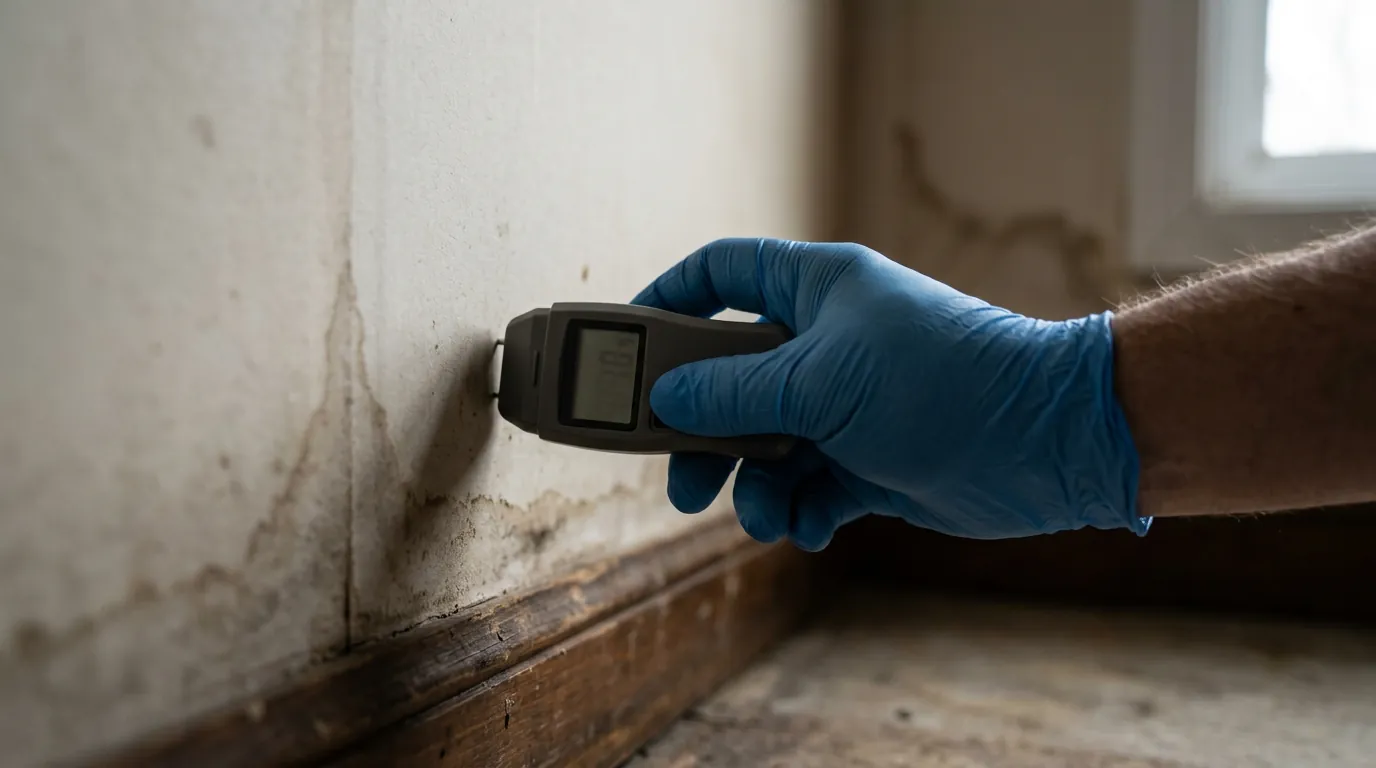
We begin with an instrument read of the room: thermal imaging to trace the damp boundaries behind finishes, meter readings on drywall, floors and framing, and an air sample where the numbers justify it. The findings set an exact demolition boundary — what comes out, what stays — and that boundary is written down and priced before anyone lifts a tool.